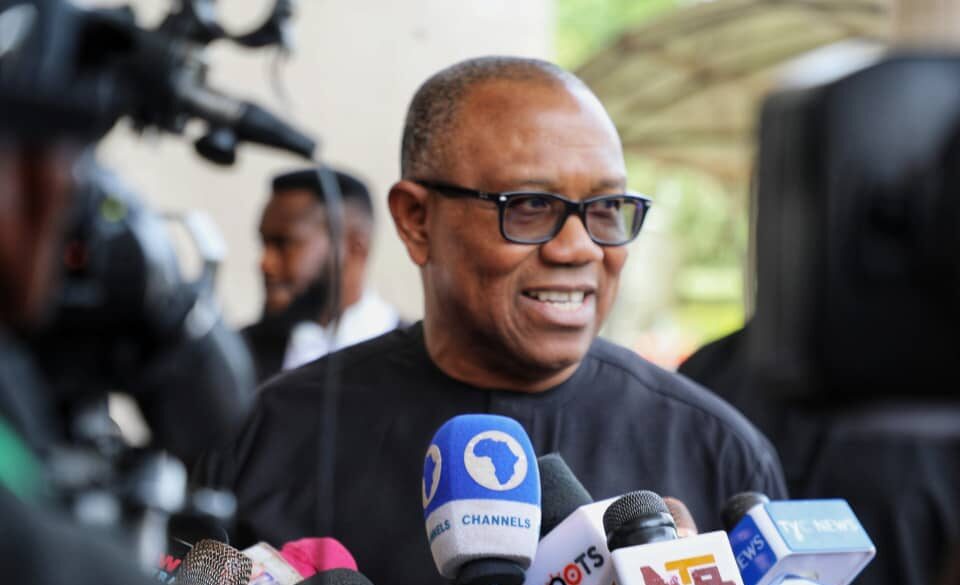
Former Labour Party presidential candidate, Peter Obi, is set to emerge as the presidential flag bearer of the Nigeria Democratic Congress (NDC) after becoming the only aspirant to purchase the party’s Expression of Interest and Nomination forms ahead of the 2027 general election.
The development comes amid deepening cracks within Nigeria’s opposition bloc following the collapse of the African Democratic Congress (ADC)-led coalition which had initially brought together Obi, former Vice President Atiku Abubakar and former Kano State governor, Rabiu Musa Kwankwaso.
NDC ends presidential form sales
The NDC officially closed the sale of forms for the presidential race on Sunday, while extending the deadline for governorship, Senate, House of Representatives and State Assembly aspirants by one week.
In a statement issued by the party’s National Secretary, Mr. Ikenna Morgan Enekweizu, the new deadline for other elective offices was shifted from May 17 to May 24, 2026.
The party said screening of aspirants would commence on May 19 and end on May 26, while collection and submission of nomination forms for cleared candidates would hold between May 20 and May 26.
Aspirants were directed to appear before screening panels with relevant documents including academic certificates, voter cards, birth certificates or declarations of age, passport photographs, curriculum vitae and party membership cards.
According to the NDC, the screening exercise would focus on competence, integrity, public acceptability and local political realities, while also reflecting the party’s affirmative action policy for women, youths and persons living with disabilities.
ADC coalition suffers major setback
The emergence of Obi as the lone presidential aspirant followed months of internal disagreements that weakened the ADC coalition formed to challenge President Bola Ahmed Tinubu and the ruling APC in 2027.
The coalition had initially generated nationwide attention after key opposition figures moved toward a united platform aimed at preventing a repeat of the divided opposition votes witnessed during the 2023 presidential election.
However, disagreements over party structure, leadership control, zoning arrangements and the choice of a consensus presidential candidate reportedly triggered fresh tensions within the alliance.
Political observers noted that the inability of the coalition leaders to resolve internal disputes eventually led to a wave of defections that destabilised the arrangement.
Obi, Kwankwaso exit ADC
Obi formally dumped the ADC earlier this month, citing persistent internal crises and lack of cohesion within the coalition.
Sources close to the former Anambra governor said Obi became increasingly uncomfortable with what he viewed as prolonged internal battles and uncertainty surrounding the coalition’s future direction.
Shortly after Obi’s exit, Kwankwaso also aligned with the NDC movement, a development that further weakened the ADC coalition and fuelled speculation about a fresh political alliance between both politicians.
Their departure was widely interpreted as a major blow to opposition efforts aimed at presenting a united front against the APC in the next presidential election.
Obi-Kwankwaso alliance gains attention
The growing relationship between Obi and Kwankwaso has continued to attract national attention, especially among opposition supporters seeking a stronger alternative ahead of 2027.
Both politicians remain influential figures with strong grassroots followings across different regions of the country.
Obi retains significant support among youths and urban voters, while Kwankwaso continues to command political influence in Kano and parts of Northern Nigeria through the Kwankwasiyya movement.
Analysts believe that their partnership within the NDC could reshape opposition politics if both camps successfully consolidate their support bases ahead of the election.
NDC positions itself as emerging third force
Since the defection of Obi and Kwankwaso, the NDC has continued to attract politicians and supporters from the Labour Party, NNPP, ADC and factions within the PDP.
The party has projected itself as a platform focused on institutional reforms, accountability and national unity, while seeking to capitalise on the growing divisions within existing opposition parties.
With the sale of presidential forms now concluded and Obi standing as the sole aspirant, indications are growing that the former Anambra governor may emerge unopposed as the NDC’s consensus presidential candidate for the 2027 election.
MESSAGE us @ https://Wa.me/+2348072633727 for business relationship, Advert, PR, Publicity, Awareness, Interviews, Feature Stories, Press Release/Statement and so on…