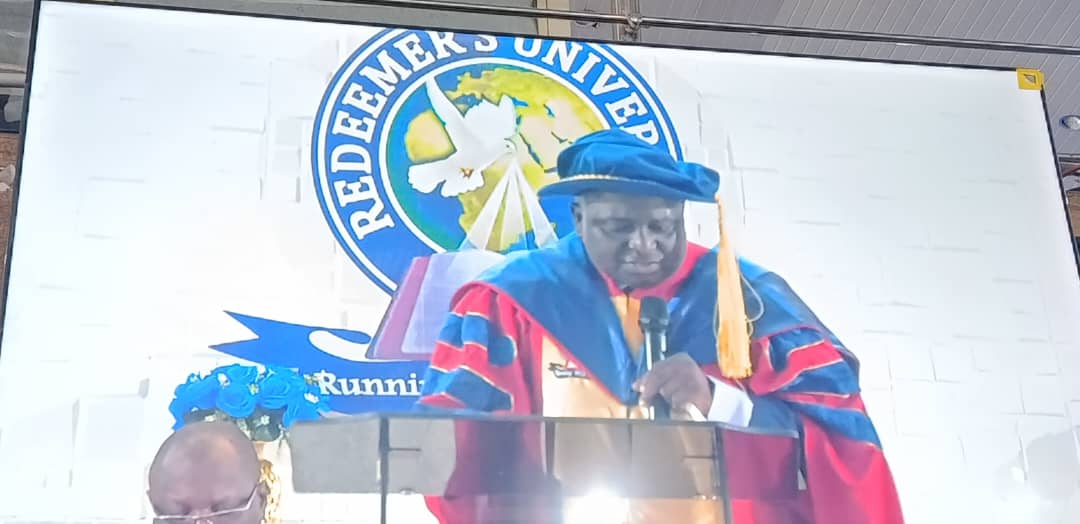
Professor Peter Adewuyi Aderonmu (MNIA, MARCON, MARCHEES, Bsc, Msc, PhD), a professor of Architectural Pedagogy and Governance Practices, department of Architecture, Faculty of Built Environment studies, Redeemer’s University, Ede, has called for a recalibration of Nigeria’s architectural education and practice to address quackery, project abandonment, and the country’s growing housing and urban challenges.
Prof. Peter Adewuyi Aderonmu made the call on Tuesday while delivering a lecture titled _“The Bauhaus-Écoles Des Beaux-Arts Traditions: The Tripod Impact of Professional Practice, Pedagogical Exploits and Administrative Stewardship”_ at Redeemer’s University, Ede.
He said the recalibration was necessary to strengthen architectural design, professional practice, and educational standards in response to rapid urbanisation, housing deficits, environmental degradation, and the need for cultural affirmation.
“Nigeria’s architecture stands at a critical juncture,” Aderonmu said. “Recalibration is needed across the profession, the academy, university administration, and among individual architects.”
He urged the Architects Registration Council of Nigeria (ARCON) and the Nigerian Institute of Architects (NIA) to strengthen ties with academia by mandating structured internship programmes and promoting practice-based research. He also recommended robust continuous professional development that includes pedagogical and managerial training for senior architects and stakeholders.
For universities and the National Board for Technical Education (NBTE), Aderonmu advised regular curriculum reviews to integrate ethics, sustainability, and management, describing it as “curriculum decolonisation.” He said faculty should be incentivised to engage in practice, and that studios and classrooms should reflect real-world professional conditions.
He also called on university administrators to respect professionalism, avoid bias in appointments, conduct background checks, and “put round pegs in round holes.”
Aderonmu challenged individual architects to adopt a holistic identity as designers, educators, and leaders. He further proposed that architectural lecturers take responsibility for teaching both 100 and 200-level undergraduates to build stronger foundations.
“The future of architectural education in Africa and globally depends on scholars who can bridge theory and practice, integrate tradition with innovation, and lead institutions with vision and intellectual depth,” he said.
He also advocated for participatory and revolutionary pedagogical models rooted in Nigerian sociocultural realities.
Aderonmu commended the Vice-Chancellor of Redeemer’s University, Prof. Shadrach Akindele, and the university staff for their contributions to the institution’s growth.
He stressed that architectural education must continue to evolve through innovation, discipline, and effective governance to meet societal demands and align with global standards.