EDITORIAL, Voice Air Media
Development across the world is rarely accidental. It is often the outcome of deliberate planning, clear vision and consistent leadership. While brilliance matters, leadership is more about capacity, direction and the ability to sustain progress over time.
For governments, development must be continuously measured and assessed to ensure that growth is steady and responsive to the needs of the people.
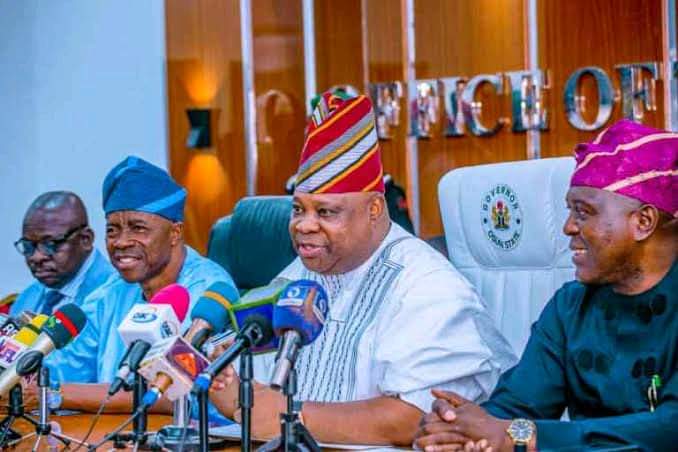
Since the inauguration of Governor Ademola Adeleke’s administration in November 27, 2022, Osun State has recorded several policy actions and development initiatives. Using commonly applied governance benchmarks, the administration’s performance over the last three years can be assessed across key sectors.
Governance Performance Indicators
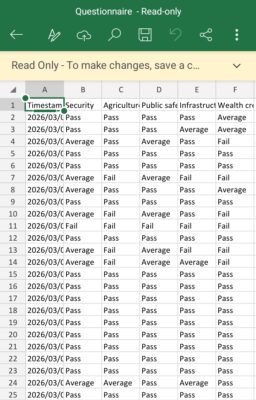
Available assessments indicate notable outcomes in the following areas:
Security – 66.7%
Agriculture – 75%
Public safety and security management – 75%
Infrastructure development – 75%
Job employment – 62.5%
Human capital development – 75%
Multi-dimensional poverty reduction and school enrollment – 62.5%
Education – 70.8%
Health – 70.8%
These indicators reflect policy focus on stability, welfare and gradual economic expansion.
Economic and Social Indicators
Economic data and social indices further provide insight into the administration’s impact:
State GDP: As of 2022 when Governor Adeleke took over governance of Osun, the State recorded a GDP of approximately ₦2.30 trillion (7.3 billion USD), according to data from BudgIT. Significantly between 2023 and 2025, accurate data not available.
Poverty Trends: While poverty remains a challenge.
Employment and Economic Inclusion: Moderate improvements, though challenges persist.
Political Stability: High level of stability compared to previous election cycles.
Overall Governance Assessment
Based on combined governance, economic and social benchmarks, the administration’s overall performance is assessed at about *70.4%*, indicating steady progress with room for improvement.
The principle of continuity in governance often rests on performance review rather than political sentiment. In many systems, sustained policies and stable leadership are seen as tools for consolidating gains already achieved.
Ultimately, the most valuable resource for development is the people. Policies that prioritise stability, inclusion and long-term planning are more likely to deliver lasting benefits.
As Osun State moves into another political cycle come August 15th, 2026, performance assessment, data transparency and issue-based dialogue should remain central to public discourse.
By Bright Olorungbotemi from Osogbo, Osun state.
©This Editorial represents the people’s assessment through poll analysis.