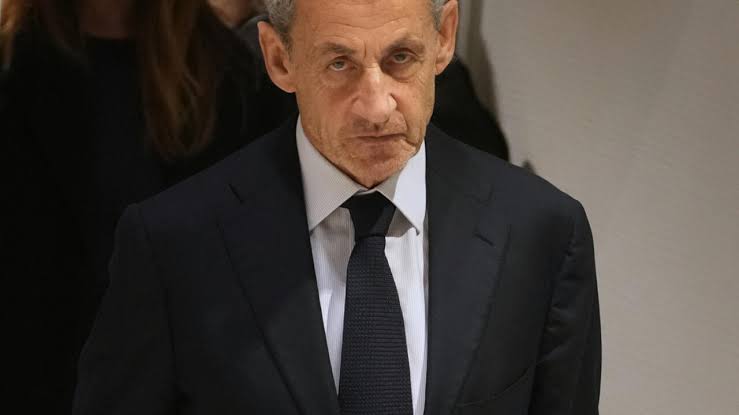
Former French President Nicolas Sarkozy has begun serving a five-year prison sentence in Paris after being convicted of criminal conspiracy and illegal campaign financing linked to alleged Libyan funding for his 2007 presidential campaign.
The once-powerful French leader reported to La Santé Prison on Tuesday, marking the first time in modern French history that a former president will physically serve time behind bars. Sarkozy, 70, has repeatedly denied any wrongdoing and has filed an appeal. However, under French law, his sentence takes immediate effect despite the ongoing legal process.
The French judiciary described the offences as being of “exceptional gravity,” arguing that they undermined public confidence in democratic institutions. The conviction follows years of investigations into claims that Sarkozy accepted millions of euros from the regime of former Libyan dictator Muammar Gaddafi, funds allegedly channelled into his presidential campaign.
Accountability at the Top
For France, Sarkozy’s imprisonment is more than a legal milestone; it is a symbol of institutional integrity, a rare demonstration that the rule of law can reach the highest office. It sends a clear message that no one, not even a former head of state, stands above justice.
In many democratic societies, this principle strengthens public faith in governance. The French judiciary’s firmness in enforcing the sentence, even as appeals continue, reinforces a deep-seated belief in the independence of state institutions.
Could This Happen in Nigeria?
The question that naturally follows is: Could such an event unfold in Nigeria? Could a former Nigerian president or senior politician be convicted and imprisoned while appeals are still pending?
In theory, yes. Nigeria’s legal framework allows for the prosecution of corruption, money laundering, and campaign-finance offences. The Economic and Financial Crimes Commission (EFCC) and Independent Corrupt Practices Commission (ICPC) have secured convictions against former governors, ministers, and top officials.
In practice, however, systemic weaknesses persist. Political interference, prolonged court processes, and selective enforcement often dilute the impact of anti-corruption efforts. Influential figures rarely face full accountability, and those convicted frequently find their sentences overturned or endlessly delayed through appeals.
Unlike France, where institutions are insulated from political pressure, Nigeria’s justice system often grapples with executive influence, compromised investigations, and public skepticism about equal treatment under the law.
A Matter of Political Will
Experts argue that the real barrier is not the absence of legal tools but the absence of political will.
For Nigeria to witness a case like Sarkozy’s, the following conditions would need to align:
- An independent and courageous judiciary that upholds justice without fear or favour.
- Prosecutors empowered and protected from political retaliation.
- Public institutions willing to prioritize integrity over loyalty.
- A citizenry that demands accountability and resists the culture of impunity.
Until these pillars are strengthened, the idea of a former Nigerian president sleeping behind bars (even for a day) remains a distant reality.
Nicolas Sarkozy’s imprisonment is a powerful reminder that democracy thrives when the rule of law is not negotiable.
France has shown that political power need not be a shield from justice.
For Nigeria, the lesson is clear: until accountability becomes truly impartial, the question “Could this happen here?” will continue to be met with uneasy silence.
MESSAGE us @ https://Wa.me/+2348072633727 for business relationship, Advert, PR, Publicity, Awareness, Interviews, Feature Stories, Press Release/Statement and so on…
YOU CAN READ MORE NEWS UPDATES AND INFO @ https://www.voiceairmedia.com