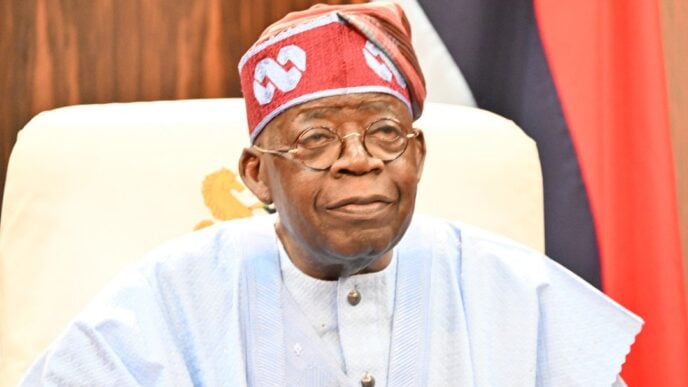
President Bola Ahmed Tinubu has directed the Minister of Finance and Coordinating Minister of the Economy, Taiwo Oyedele, to present an account of the Federal Government’s economic reforms and explain their impact on Nigerians.
Tinubu made the announcement in a message to Nigerians as his administration prepares to unveil what it described as the Reforms Scorecard, an assessment intended to outline the achievements, costs and consequences of the economic decisions taken since the administration began in 2023.
The President said the scorecard would provide Nigerians with an opportunity to understand the numbers behind the government’s reform programme and what the policies have meant for households, businesses and the wider economy.
“When we began this journey of reform in 2023, I promised that the difficult decisions we were making would serve the purpose of building an economy that works better for you and a country that is stronger for our children,” Tinubu said.
According to the President, the reforms scorecard will not only focus on what the government says it has achieved but will also address the costs associated with the policies and what the government believes could have been lost had the decisions not been taken.
“Today, your government presents The Reforms Scorecard. It sets out what our reforms have achieved, what they have cost us, and the greater costs and harms we have prevented by acting when we did,” he said.
Tinubu subsequently directed Oyedele to provide the government’s account to the public, placing particular emphasis on the figures behind the reforms.
“I have therefore directed the Minister of Finance and Coordinating Minister of the Economy, Taiwo Oyedele, to give an account to Nigerians, to explain the numbers, the choices we have made, the progress recorded, and the work that remains,” the President said.
The decision comes at a critical point in the government’s reform agenda, as Nigerians continue to debate the consequences of policies introduced since 2023, particularly their effects on household purchasing power, businesses, public finances and the cost of living.
While the administration has consistently argued that difficult reforms were necessary to stabilise the economy and create the conditions for long-term growth, the central question for many Nigerians has been whether the benefits of those reforms are reaching ordinary households quickly enough.
That makes the Reforms Scorecard potentially more significant than another government presentation of economic achievements.
The real test will be whether the figures allow Nigerians to independently understand the relationship between the sacrifices demanded by the reforms and the benefits the government says they have produced.
Tinubu acknowledged the public’s right to see and understand the numbers.
“You deserve to see the numbers. You deserve to know what has changed and what these reforms mean for you, your family, your business and our country,” he said.
That statement places an important responsibility on the government: the scorecard must go beyond announcing achievements and provide sufficient context for Nigerians to assess the reforms for themselves.
For households struggling with higher prices, businesses dealing with increased operating costs and investors watching the direction of the Nigerian economy, the most important figures may not necessarily be the government’s headline economic indicators.
They will want to know what the reforms have meant in practical terms — whether incomes have kept pace with prices, whether businesses are becoming more viable, whether government revenue has translated into better public services and whether economic stability is beginning to improve living standards.
The scorecard therefore presents an opportunity for the administration to move the economic reform debate from competing political claims to measurable outcomes.
It could also provide a clearer basis for assessing what has worked, what has not worked and what the government intends to change.
Tinubu concluded his message by framing the exercise as an accountability process between the government and the citizens.
“This is your government.
This is your country.
This is our account to you,” he said.
The Reforms Scorecard is expected to be presented through a livestream on the official YouTube channel of the State House, with Oyedele expected to provide details of the government’s economic calculations and the progress recorded so far.
For Nigerians, however, the bigger issue will be whether the presentation answers the questions that have followed the reforms since 2023: What exactly have Nigerians sacrificed, what has the country gained, who has benefited, who has borne the greatest burden, and when should ordinary citizens expect to feel the promised benefits?
Those questions could ultimately determine whether the Reforms Scorecard becomes merely another government communication exercise or a meaningful public accountability document.